Handling Sensitive Information: What to Check Before You Share
Sensitive information is part of everyday work. It can appear in emails, documents, spreadsheets, reports, screenshots, chat messages and Gen AI prompts.
Most mistakes are not intentional. They happen in everyday moments: forwarding an email too quickly, uploading the wrong file, leaving a document on a desk or sending information to the wrong person. The cost can be more than a quick correction. Sensitive information can affect privacy, customer trust, business operations and, in some cases, lead to financial or compliance consequences.
That is why it is worth taking a moment to stop and check before you share.
What is sensitive information?
Sensitive information is any information that should be handled with care.
This includes Personally Identifiable Information (PII), which is information that can identify a person either on its own or when combined with other details. Sensitive information may include:
- names, addresses, phone numbers or dates of birth
- account numbers, payment details or financial records
- employee records or HR information
- customer documents or contracts
- internal reports, notes or business plans
- login details, passwords or access information
- screenshots that show private or internal information
Some information may not look sensitive at first. But when combined with other details, it can still identify a person, customer or organisation.
How sensitive information can be exposed
Sensitive information can be exposed through small, everyday actions. An email might be sent to the wrong person, the wrong file may be attached, or a screenshot could show private details in the background. A document might also be uploaded to a tool that has not been approved for work use.
It can happen offline too. Printed documents, visible screens, notes left on desks or conversations in public places can all expose information that should stay protected.
These mistakes can happen quickly, but their impact can last much longer.
What to check before you share
Before you send, upload, forward or discuss sensitive information, pause and ask:
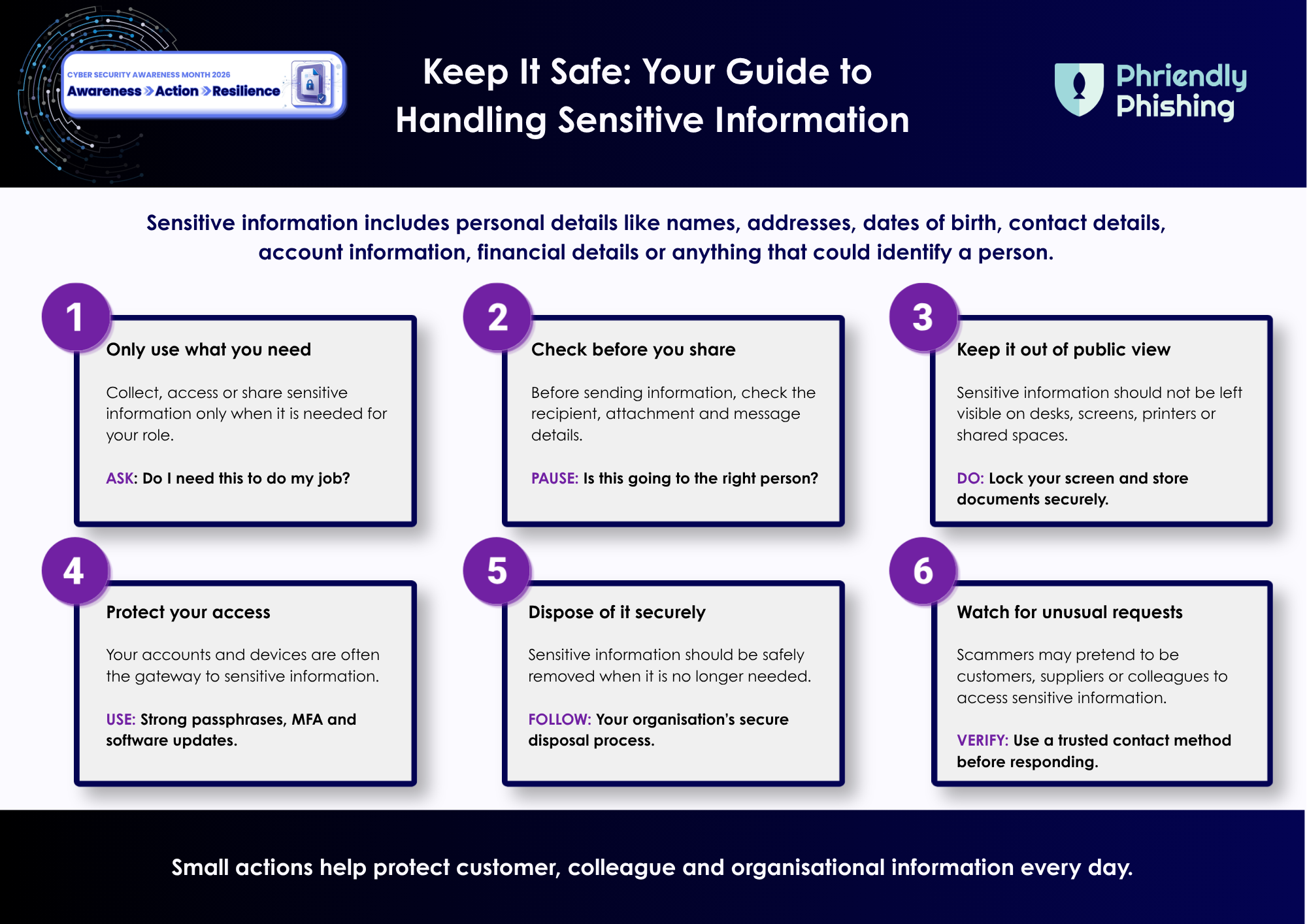
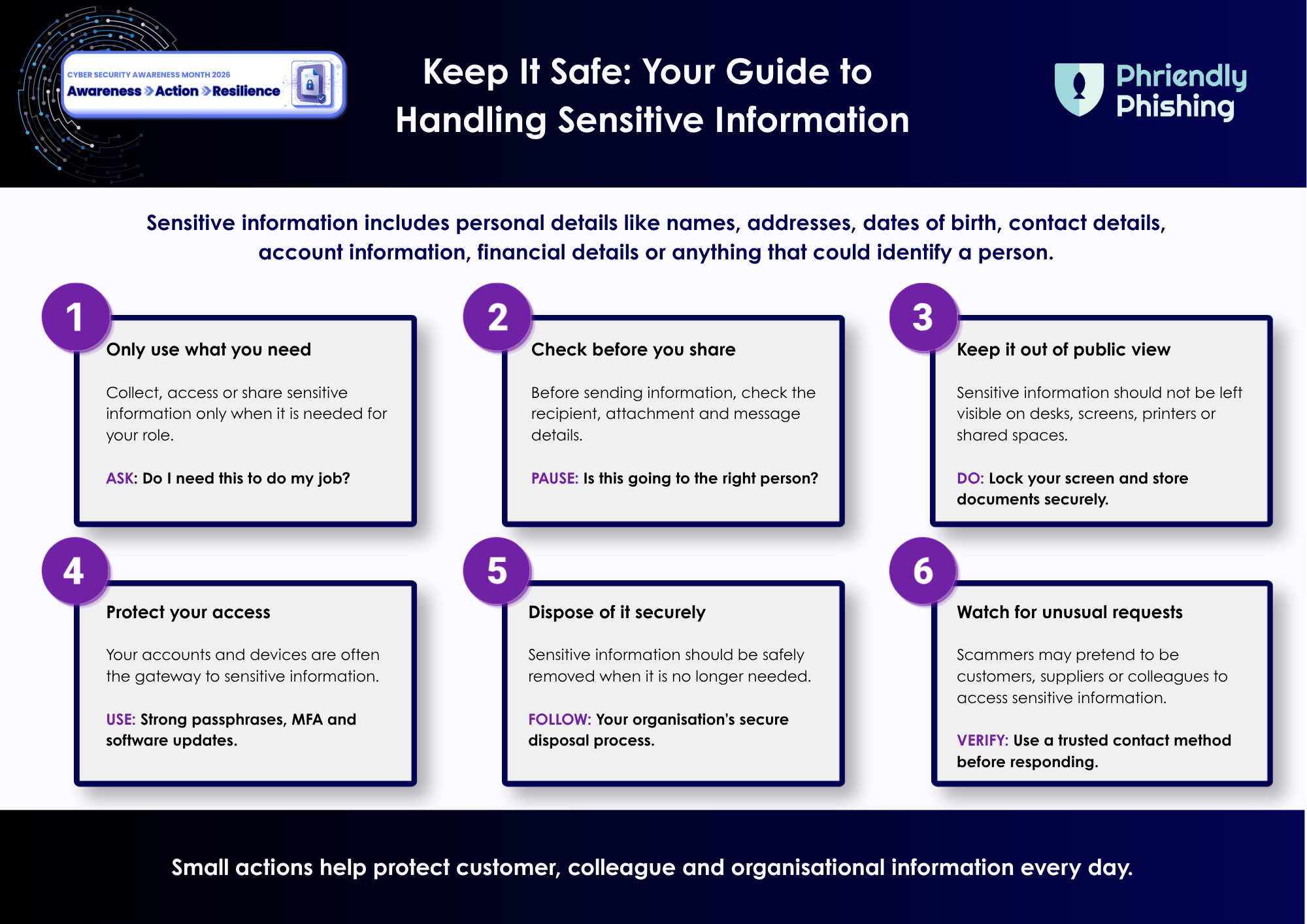
Do I need this information to do my job? Only access, collect or share what is needed.
Is this going to the right person? Check the recipient, attachment and message before sending.
Could someone else see it? Lock screens, clear desks and avoid leaving documents in public view.
Am I using an approved tool or process? Be careful before uploading documents, using Gen AI tools or sharing files externally.
Does this request feel unusual? Verify unexpected requests through a trusted contact method before responding.
These checks only take a moment, but they can prevent sensitive information from going to the wrong place.
What to do if something feels off
If a request feels unusual, urgent or out of place, do not rush. Check who is asking, what they need and whether the information should be shared.
Scammers may pretend to be customers, suppliers, colleagues or leaders to access sensitive information. They may create pressure, ask for secrecy or make the request sound routine.
When in doubt, verify through a known contact method or follow your organisation’s usual process.
If sensitive information has been sent, shared or accessed by mistake, report it as soon as possible. Quick reporting gives the right team a better chance to limit the impact.
Handling sensitive information safely does not need to be complicated. Before you share, take a moment to check what you are sharing, where it is going and whether it should be shared at all. That small pause can help protect privacy, customer trust and the people behind the data.
Download the Weekly Tipsheets
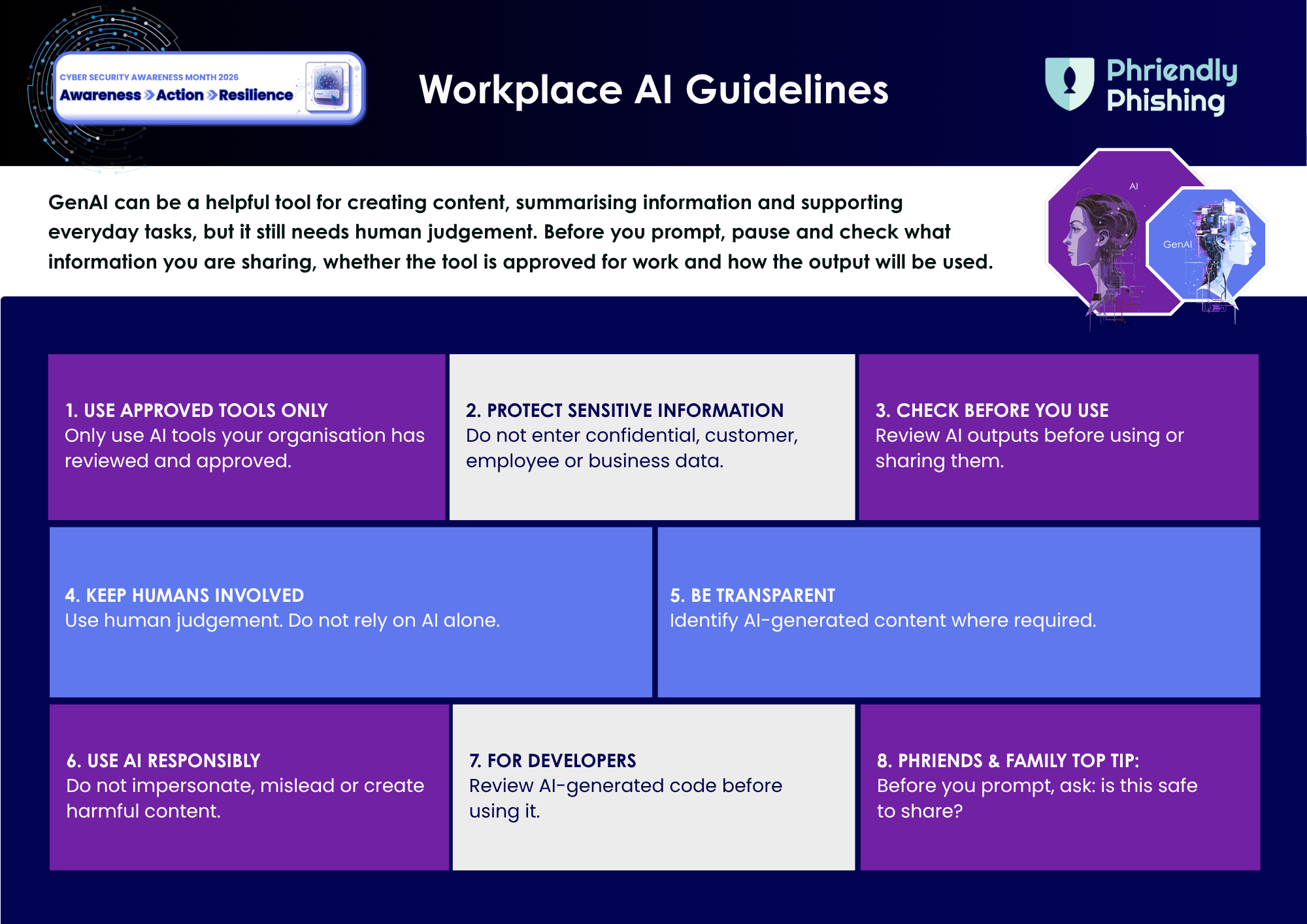
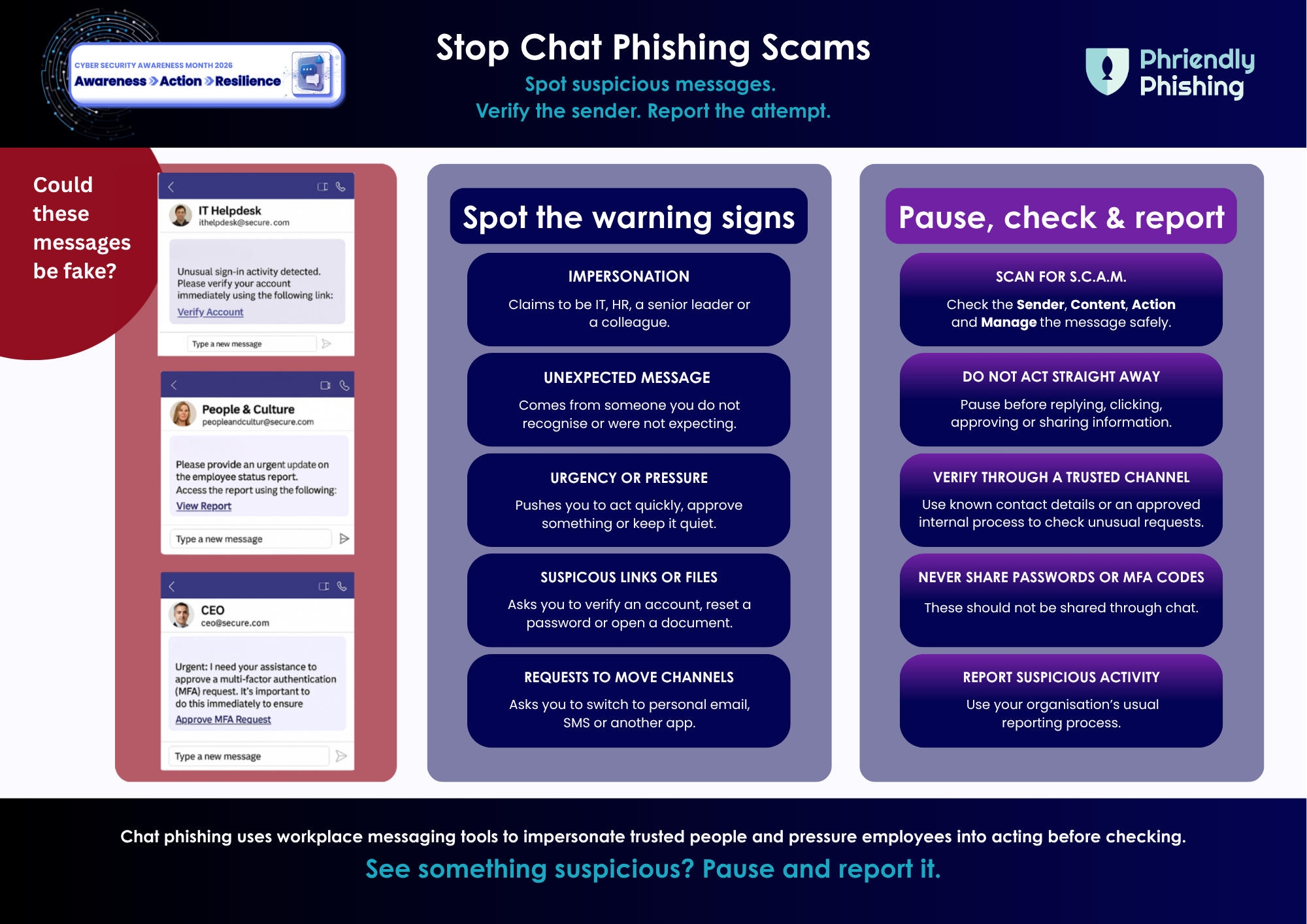
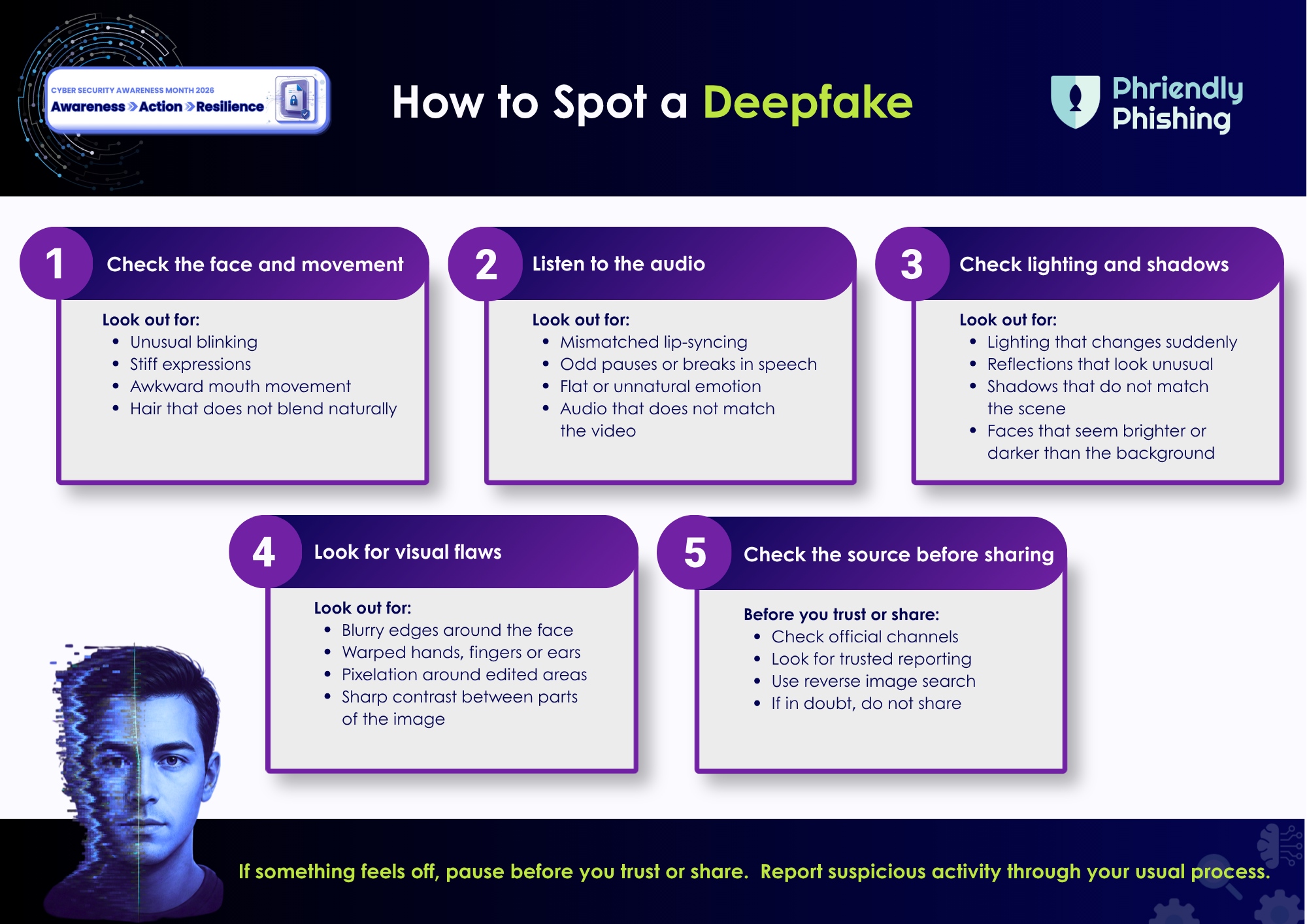
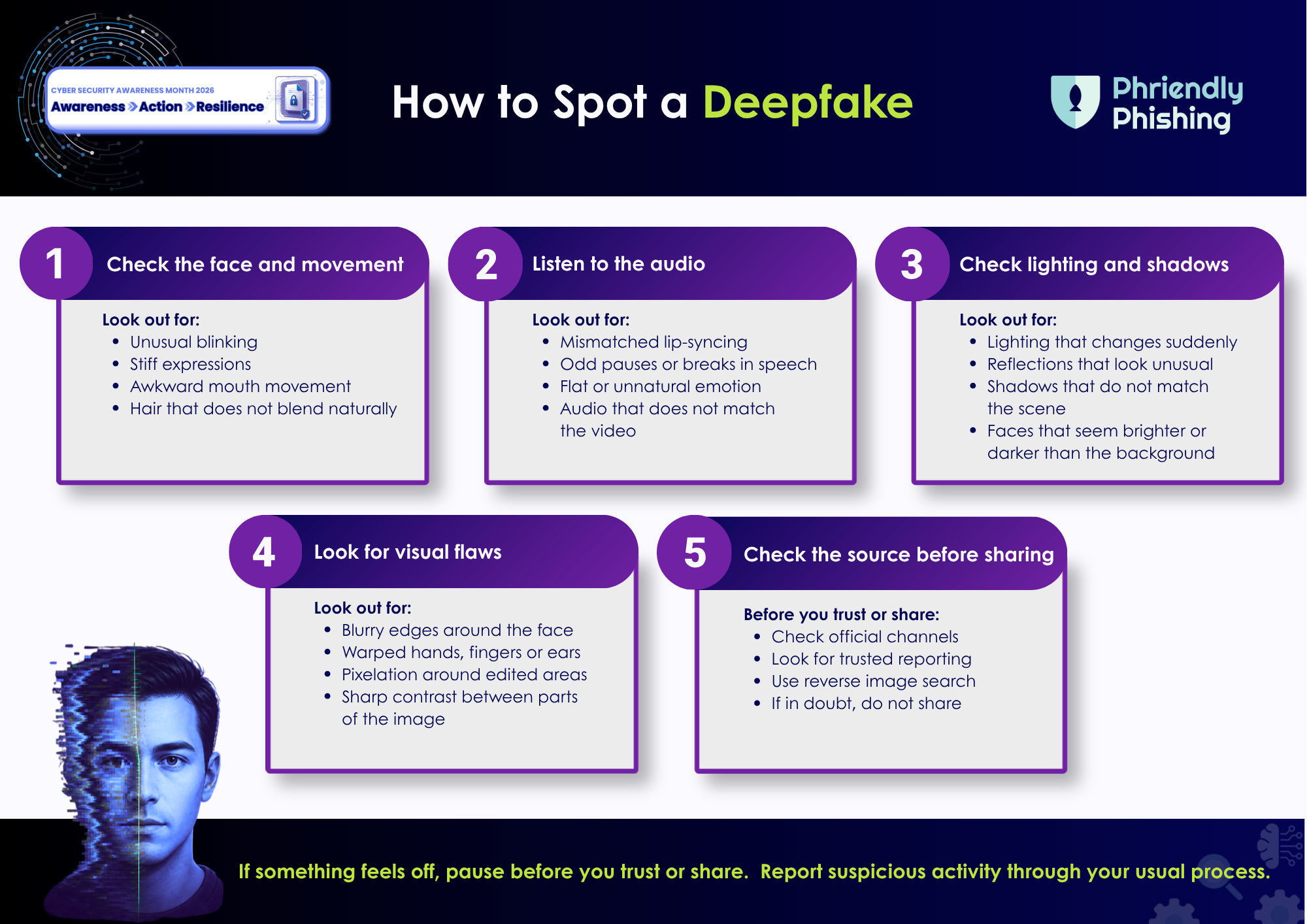
Keep the key behaviours front of mind with four quick-reference tipsheets. Share them with your team throughout the month to support safer everyday actions across Gen AI, Chat Phishing, deepfakes and sensitive information.
Tell us what you thought of the material by completing a quick survey.
Here at Phriendly Phishing, we pride ourselves on staying ahead of the curve by always adding new, relevant, and localised content for our learners.
Discover how Phriendly Phishing can help protect your business and employees from the ever-growing threat of phishing attacks and data breaches.

Phriendly Phishing Copyright © 2026 | Terms and Conditions | Privacy Policy