How to Spot a Deepfake
Deepfakes are becoming harder to spot. You may not always be able to tell what is real at first glance, and that is exactly why they can be so effective.
The goal is not to become a deepfake expert. The goal is to know what to look for, when to pause and what to do before you trust, share or act on what you see or hear.
What is a deepfake?
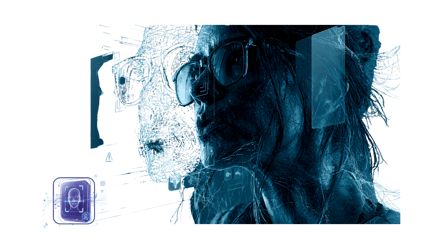
A deepfake is video, audio, or an image that has been created or manipulated using artificial intelligence. It can make it look or sound like someone said or did something they never actually did.
Some deepfakes are used for entertainment or creative purposes. Others are used to mislead, impersonate, or influence people. In cyber security, deepfakes are a concern because they can make scams; misinformation and impersonation attempts feel more believable.
Why deepfakes matter
Deepfakes can manipulate three things' people often rely on when deciding whether to trust something.
Identity: A familiar face or voice can make a message seem genuine.
Trust: A realistic video or audio clip can feel more convincing than text alone.
Urgency: A surprising or time-sensitive message can pressure someone to act quickly.
That combination can be powerful. A deepfake does not need to be perfect. It only needs to create enough trust or pressure for someone to click, share, approve, respond, or provide information before checking.
Deepfakes may be used to impersonate a leader, colleague, supplier, public figure or family member. They may also be used to support false information, make a fake request seem more believable or influence people before they have time to verify the source.
How to spot a deepfake
Deepfake technology is improving, so there may not always be obvious signs. Still, there are a few things worth checking.
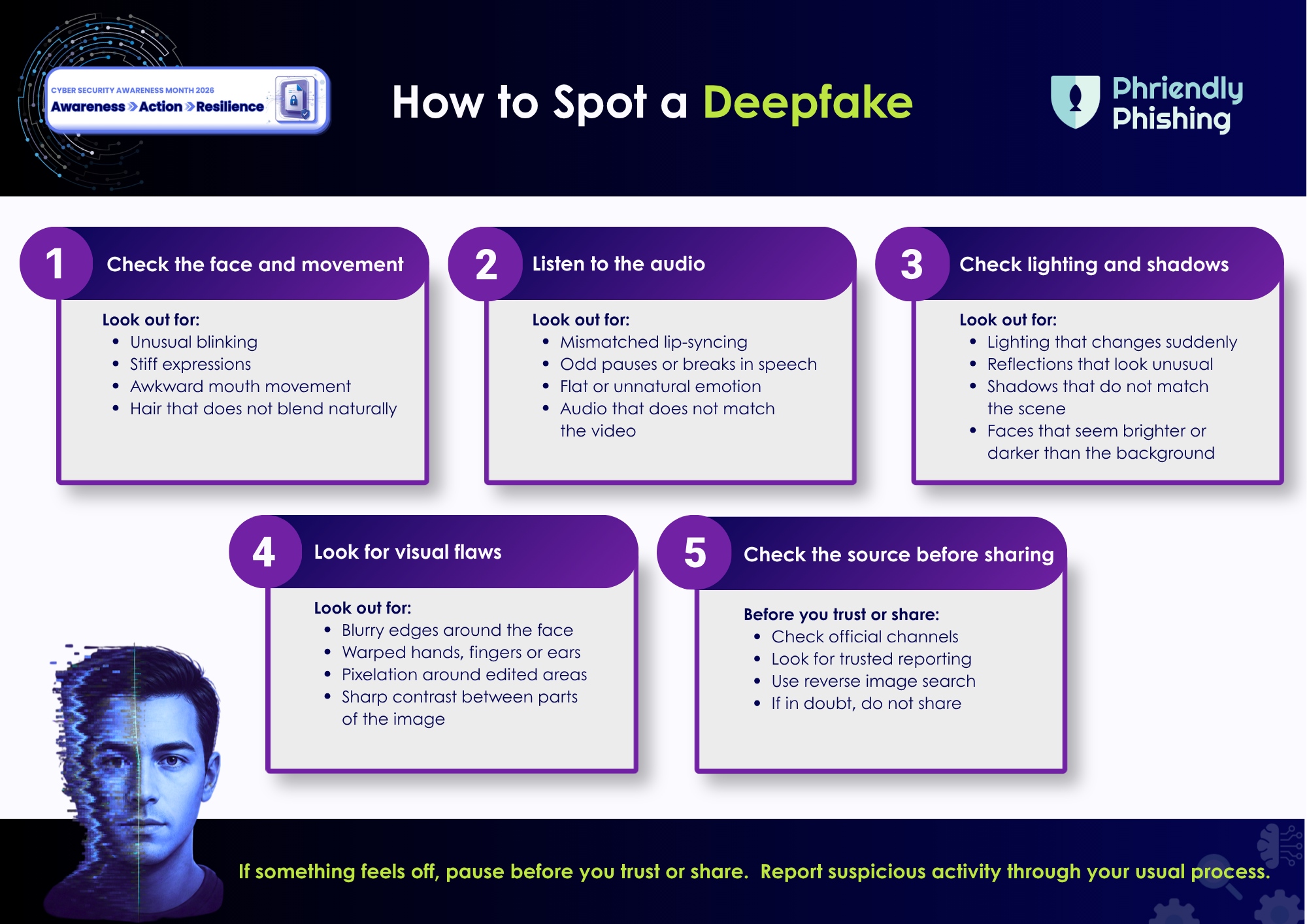
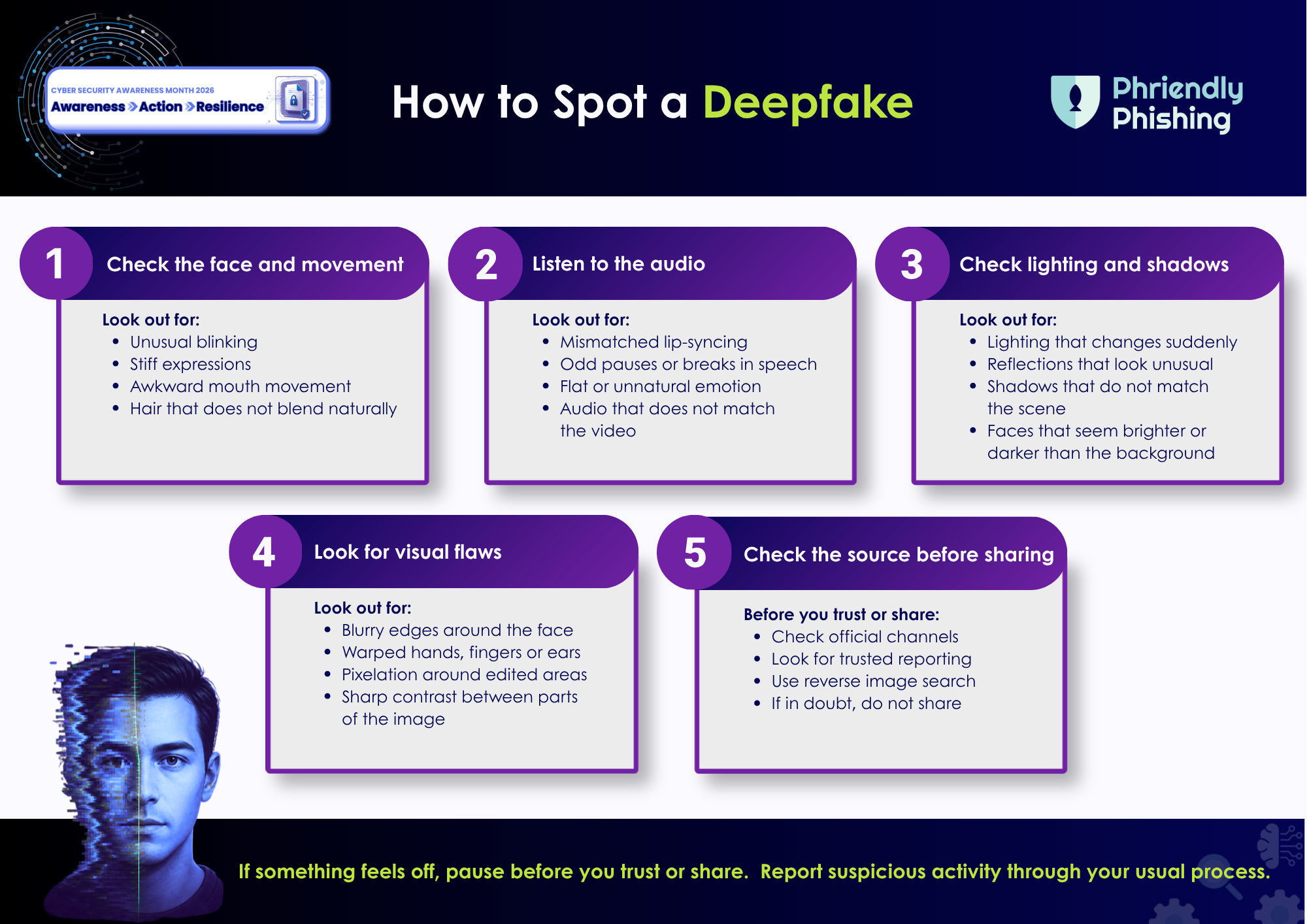
1. Look at the face and movementWatch for movement that feels unnatural, delayed or out of sync. The person’s face may look slightly stiff, their expressions may not match the tone of the message, or their facial movement may not line up with the rest of their body.
Some signs to look for include:
- lip movement that does not match the audio
- unusual blinking
- stiff or delayed facial expressions
- blurry edges around the face, hair or jawline
One sign does not prove something is fake, but it is a reason to pause and take a closer look.
2. Listen to the audio
Deepfake audio and voice cloning can sound realistic, but there may still be small clues. Listen for unusual pauses, flat emotion, odd pronunciation, inconsistent tone or speech that feels too smooth or unnatural.
If a voice sounds familiar but something does not feel right, check before acting. A familiar voice should not be the only reason to trust a request.
3. Check the context
The context around the message can be just as important as the video, image or audio itself. Deepfakes often rely on surprise, urgency or emotion to make people react quickly.
Ask yourself:
- Is this unusual for the person or organisation?
- Is it asking for urgent action?
- Is it asking for money, credentials or sensitive information?
- Is it discouraging you from checking with someone else?
- Did it come from a trusted source?
A message that creates pressure, secrecy or surprise should be treated with caution.
4. Check the source
Before you trust or share a video, image or audio clip, check where it came from. Look for trusted reporting, official channels or confirmation from a reliable source. Be careful with content that only appears on one account, has no clear source or is being shared with emotional or urgent language.
If the content includes a request, do not rely on contact details provided in the message itself. Use a known phone number, official website, internal process or trusted contact method.
5. Think before sharing
Deepfakes can spread quickly when people share them before checking. Even sharing something to ask, “Is this real?” can help it travel further. Before you forward, repost or discuss it widely, pause and check. If you are unsure, it is safer not to share.
What to do if something feels off
You do not need to prove something is fake before taking a safer next step. If a video, image or audio clip feels unusual:
- pause before responding, clicking, approving or sharing
- check where the content came from
- look for signs that it may have been manipulated
- verify sensitive or urgent requests through a trusted channel
- report suspicious content through the appropriate process
This is especially important if the message involves payments, account access, credentials, confidential information or urgent action.
You do not need to spot every deepfake perfectly. You just need to know when to slow down and take a safer next step.
Download the Weekly Tipsheets
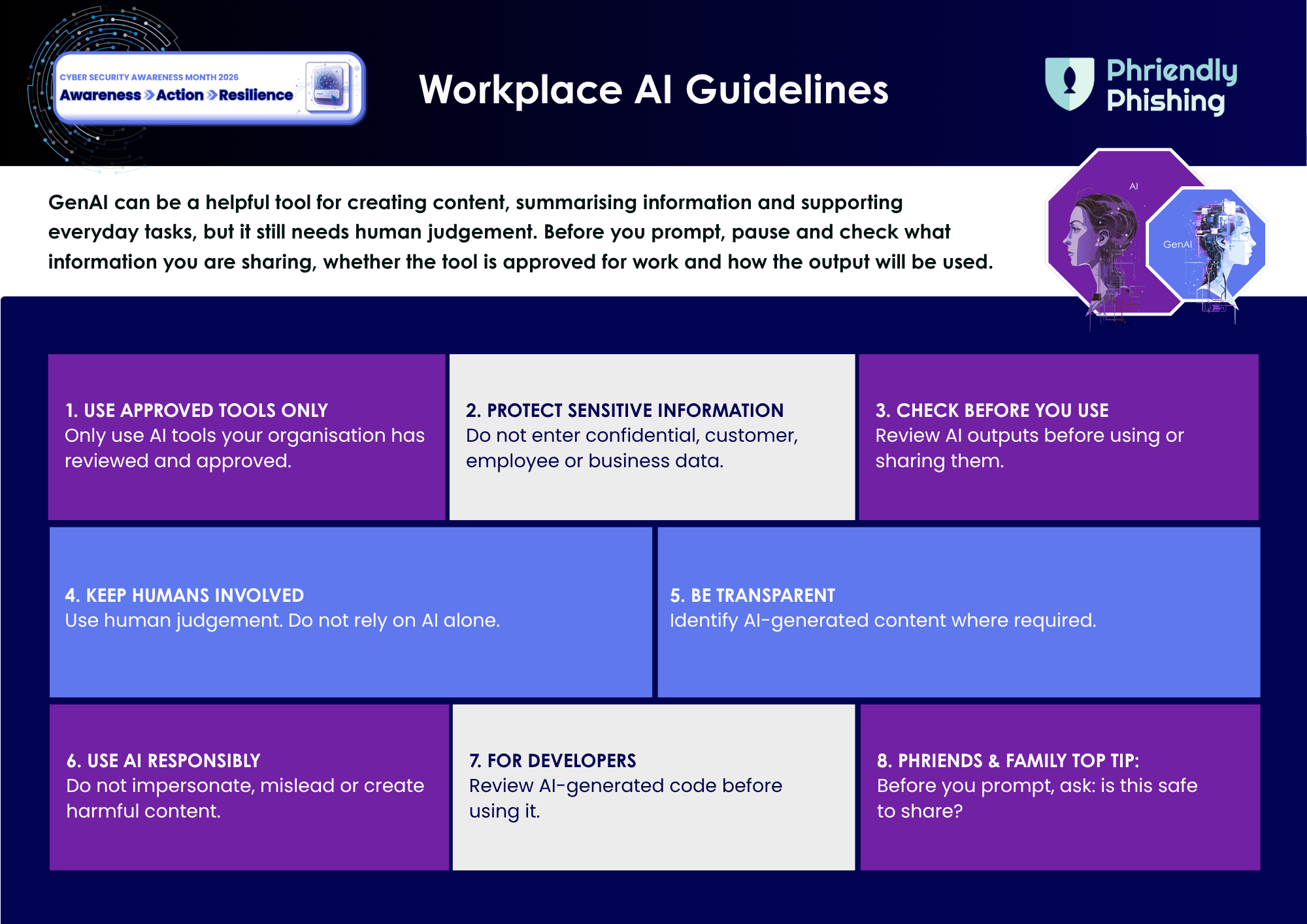
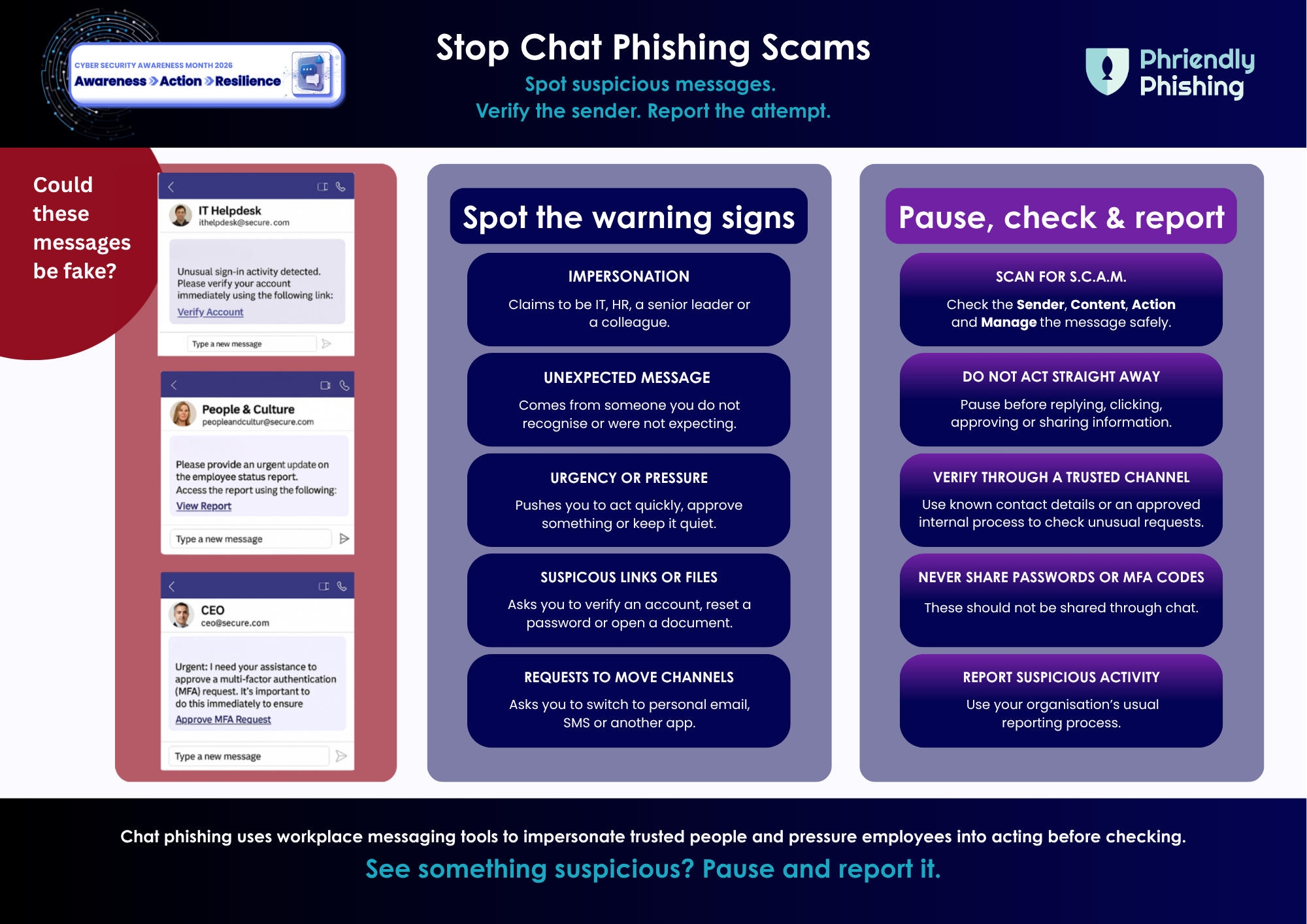
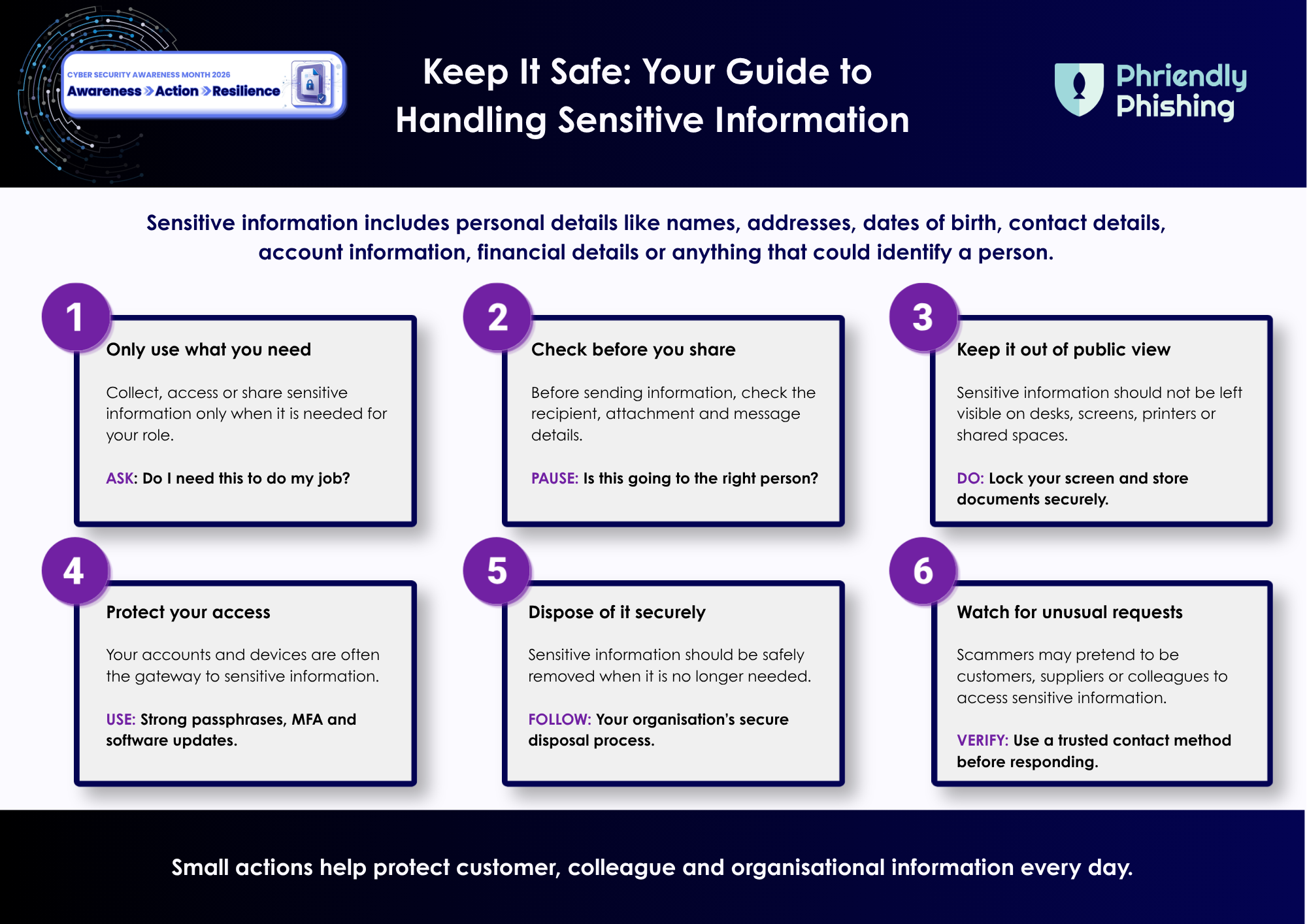
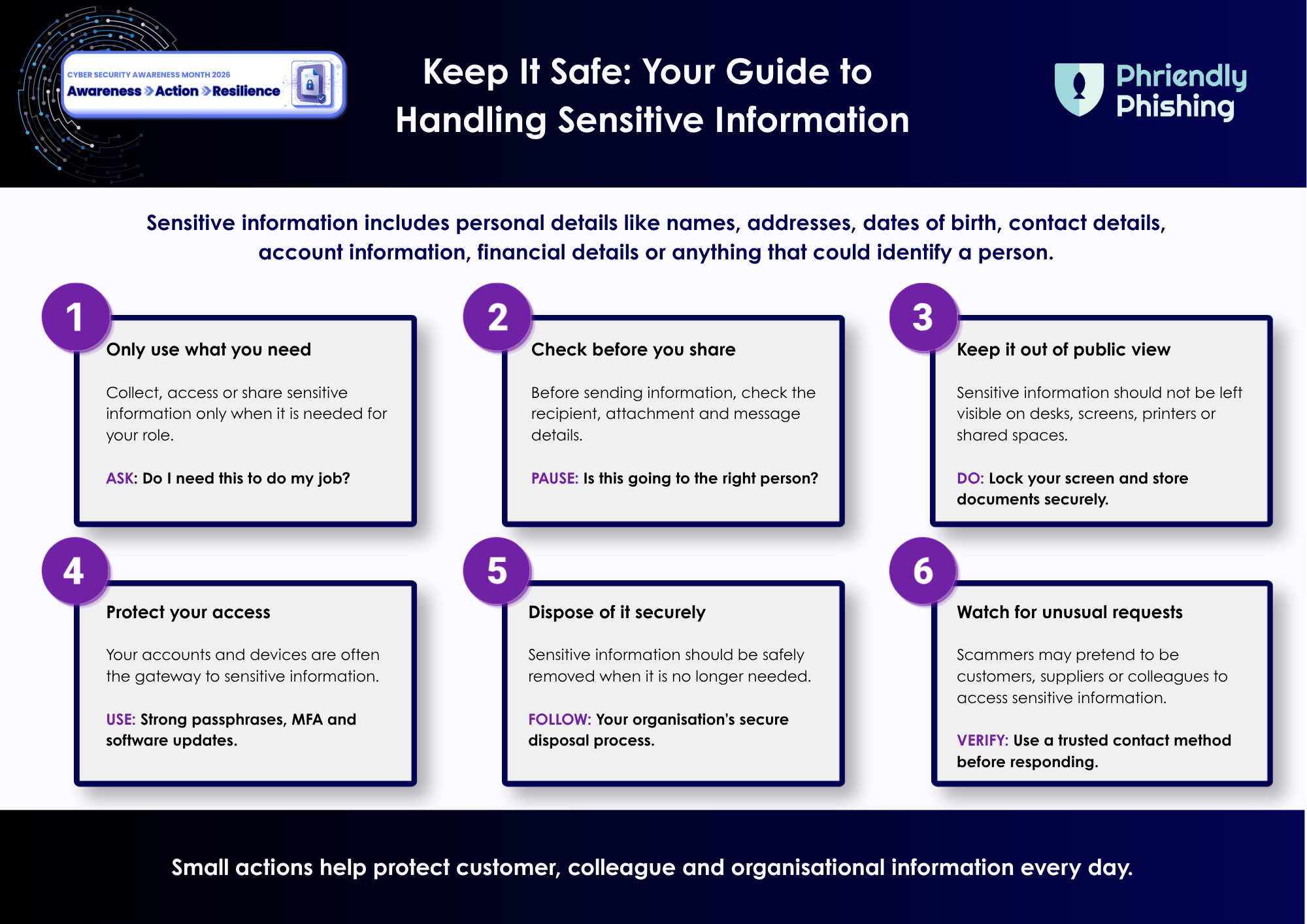
Keep the key behaviours front of mind with four quick-reference tipsheets. Share them with your team throughout the month to support safer everyday actions across Gen AI, Chat Phishing, deepfakes and sensitive information.
Tell us what you thought of the material by completing a quick survey.
Here at Phriendly Phishing, we pride ourselves on staying ahead of the curve by always adding new, relevant, and localised content for our learners.
Discover how Phriendly Phishing can help protect your business and employees from the ever-growing threat of phishing attacks and data breaches.

Phriendly Phishing Copyright © 2026 | Terms and Conditions | Privacy Policy